Best STEM Gifts Under $50 for Teenagers (2026)
Seven picks. All under $50. Ranked by value for money — not by who pays us the most.
Some of these are classic kits that have been in classrooms for years. Some are new hardware that didn’t exist two years ago. All of them are the kind of thing a curious teenager can actually do something with, not just put on a shelf.
1. Waveshare ESP32-S3 1.28” Round Display — $20
Best for: The teen who wants to say “I built this watch”
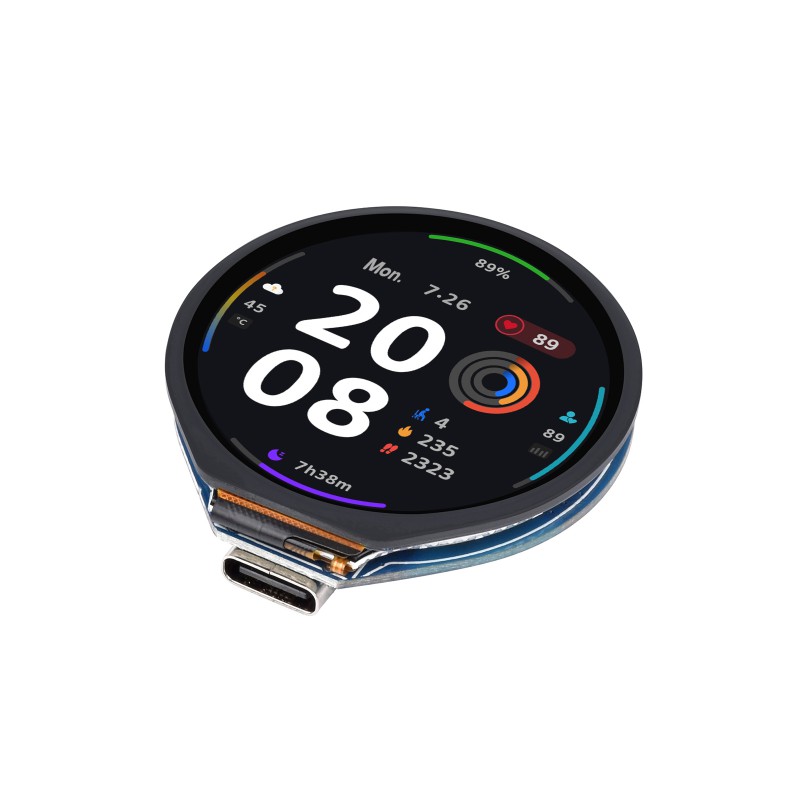
A circular 1.28” full-color LCD screen on an ESP32-S3 development board, roughly the size of a smartwatch face. You’re buying the parts to build your own wearable. For $20, that’s a genuinely absurd deal. The board has a rechargeable battery connector, a USB-C port, and enough horsepower to pull live data over Wi-Fi — so teens can build a crypto ticker, a weather display, a custom clock face, or a real-time notification mirror paired to their phone.
It requires some wiring and Arduino or MicroPython code, so it’s not a zero-skill gift. But if your teenager has already blinked an LED or written a Python script, this is the next logical step. The community on GitHub has done a lot of the heavy lifting already — there are dozens of watch firmware projects to fork and learn from.
Bottom line: The best $20 you can spend on a kid who wants to build wearables.
2. BBC Micro:bit V2 GO Bundle — $22
Best for: Absolute beginners, ages 10 and up
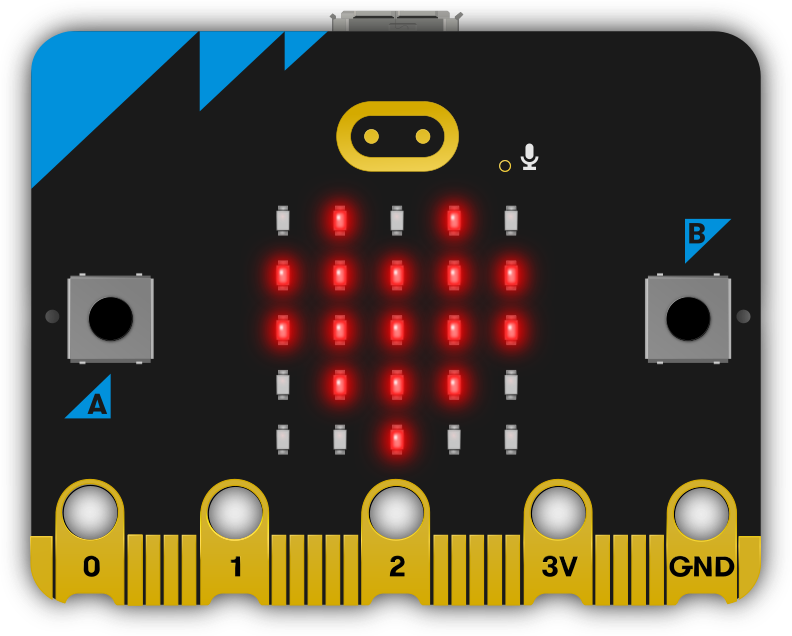
The BBC Micro:bit is the entry point. It’s been shipping to UK schools since 2016 and has the single best beginner ecosystem in the market: a browser-based drag-and-drop editor, a MakeCode block environment that transitions cleanly into real Python, and hundreds of guided projects with clear instructions. No IDE to install. No drivers to fight. Open a tab, plug it in, start coding.
The V2 adds a built-in microphone, a speaker, and a faster processor compared to the original. The GO Bundle includes the board, a battery pack, and a USB cable — everything needed to run the first project in under five minutes. Built-in Bluetooth and radio mean two Micro:bits can talk to each other wirelessly, which opens up multiplayer games and sensor networks.
Bottom line: If the teen in your life has never written a line of code, start here. The on-ramp is genuinely gentle.
3. M5Stack Cardputer Adv — $30
Best for: The hacker-curious teen who wants a real tool, not a kit
OUR TOP PICK
Buy on Amazon → | Full Review →
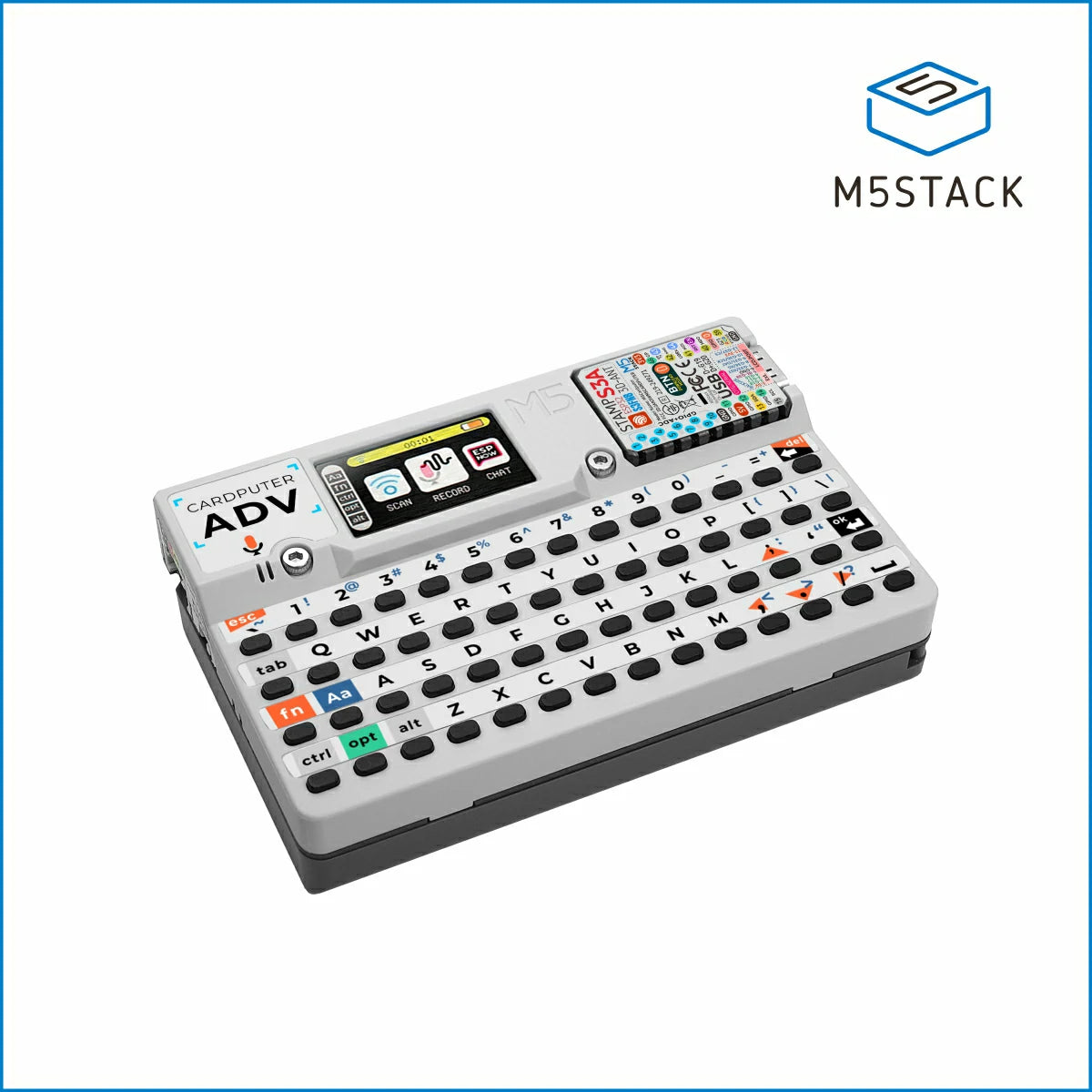
The Cardputer is a fully assembled pocket computer with a real QWERTY keyboard, a 2.125” color display, built-in WiFi, a microphone, and a speaker — at $30. It fits in a jeans pocket and looks like something out of a spy film. It ships with its own operating system already installed, so it works the moment you turn it on.
The ESP32-S3 chip inside is powerful enough for real projects: WiFi scanners, retro games, Bluetooth remote controls, pocket AI terminals, and security research tools. The Evil-M5Project firmware (open source, educational) turns it into a WiFi security analyzer — a legitimate gateway into cybersecurity for teens curious about ethical hacking. There’s an enormous GitHub community, active forums, and dozens of polished open-source apps to run from day one.
Bottom line: The most interesting STEM gift at this price. Teens with any interest in tech, cybersecurity, or hacking (the legal kind) will use this constantly.
4. Snap Circuits Jr. SC-100 — $25
Best for: Ages 8–12 only. Not recommended for teenagers.
Snap Circuits uses color-coded, snap-together components — no soldering, no breadboards, no loose wires. Kids build real circuits (alarms, fans, AM radios, light sensors) by snapping pieces onto a numbered grid. The SC-100 includes 100 projects and 30 components, and it genuinely works. Every circuit in the manual produces a real result, which matters a lot when you’re 9 years old and your attention span is 20 minutes.
This is an excellent gift — for a 9-year-old. For a teenager, the projects feel basic within a few sessions, and the snap-together format doesn’t teach the underlying circuit principles that make more advanced work possible. If your teenager is already in middle school, jump ahead to the Arduino kits below.
Bottom line: Five stars for ages 8–12. One star for teenagers. Know your audience.
5. ELEGOO UNO R3 Super Starter Kit — $35
Best for: The classic Arduino beginner path
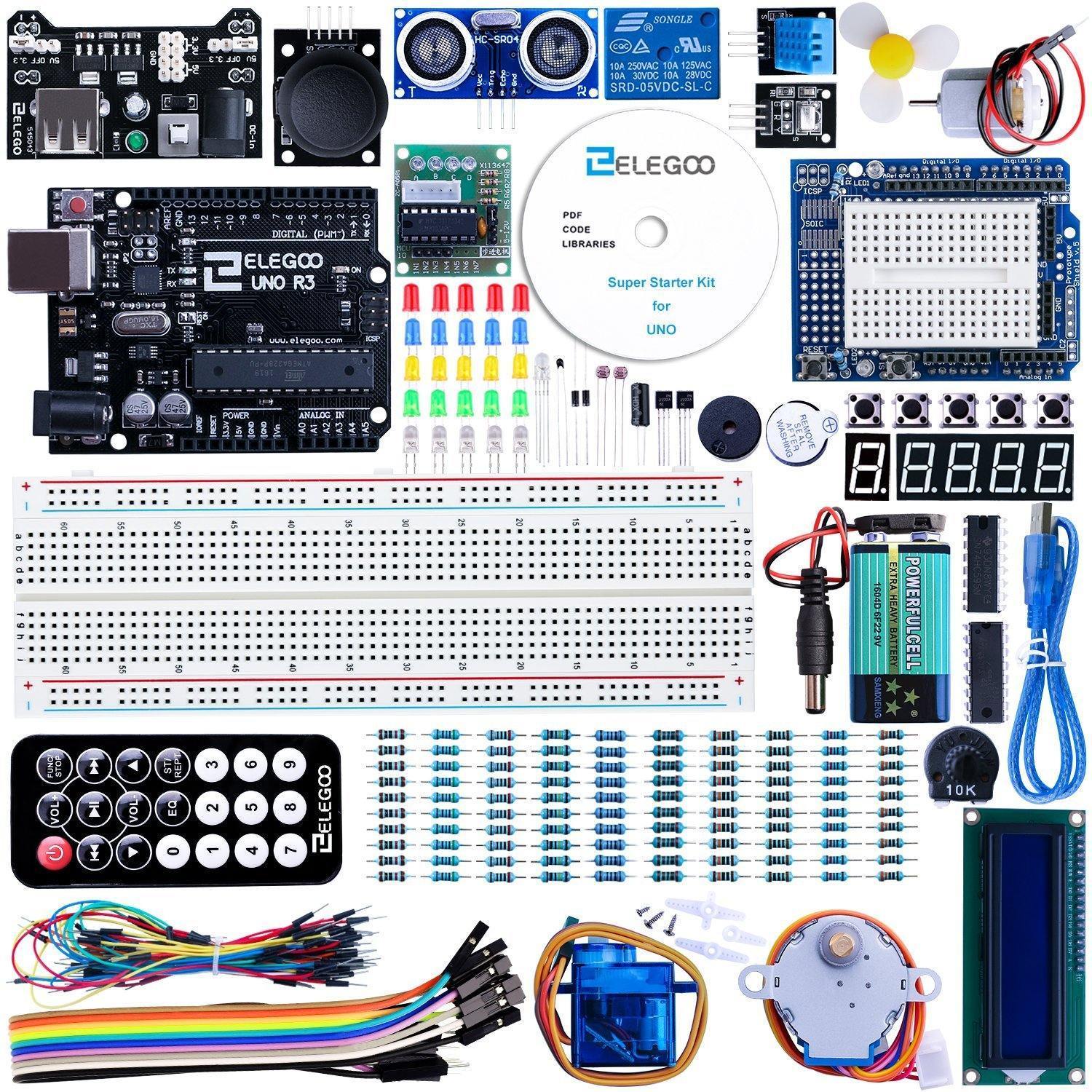
The ELEGOO UNO R3 is the most-reviewed Arduino starter kit on Amazon for good reason: it’s complete, the tutorials are excellent, and the UNO R3 board is the standard that every Arduino tutorial on the internet was written for. You get the board, a breadboard, 63 components, jumper wires, resistors, LEDs, sensors, a servo, a stepper motor, and a printed project guide. Everything needed to build 32 different projects is in the box.
The Arduino ecosystem is vast. Once a teen finishes the included projects, there are literally thousands of tutorials online — for everything from home automation to robotics to musical instruments. The UNO’s USB connection makes it simple to program from any computer, and the IDE is free. The only downside: no built-in WiFi on the UNO, which limits internet-connected projects. For that, see the ESP32 kit below.
Bottom line: The safe, proven choice. Great for structured learners who want a complete beginner-to-intermediate path with lots of hand-holding available.
6. ELEGOO ESP32 Super Starter Kit — $40
Best for: Arduino + WiFi — the better long-term investment
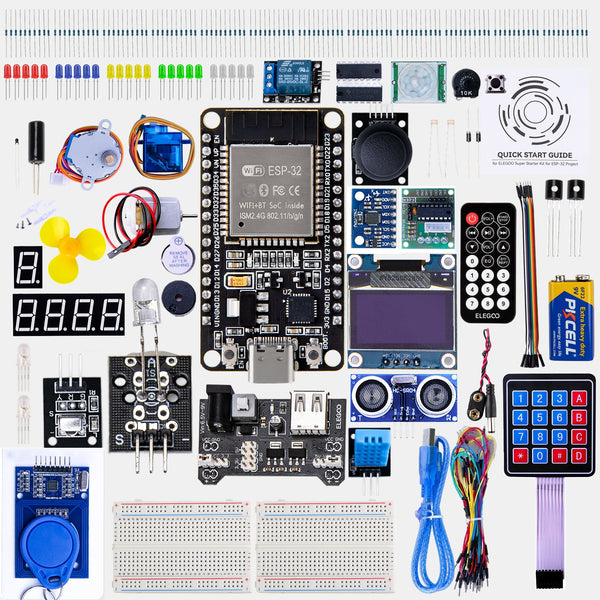
Same ELEGOO quality as the UNO kit above, but with an ESP32 board at the center instead of a plain Arduino UNO. The difference matters: the ESP32 has built-in WiFi and Bluetooth, which means teens can build internet-connected projects — weather stations that pull live data, smart home sensors, Bluetooth controllers, IoT devices. The UNO can’t do any of that without add-on shields that cost extra.
The component count is similar, the tutorial quality is the same, and the price is only $5 more. If you’re choosing between the two ELEGOO kits and aren’t sure which to buy, get this one. The WiFi capability dramatically expands what’s possible as a teen’s skills grow, and the ESP32 is the chip that powers most of the consumer IoT devices in the world — learning on it is learning on something real.
Bottom line: The smarter buy over the UNO kit for most teens. Five extra dollars buys WiFi and Bluetooth for every project they ever build on it.
7. Freenove Ultimate Starter Kit — $50
Best for: The most components for the money
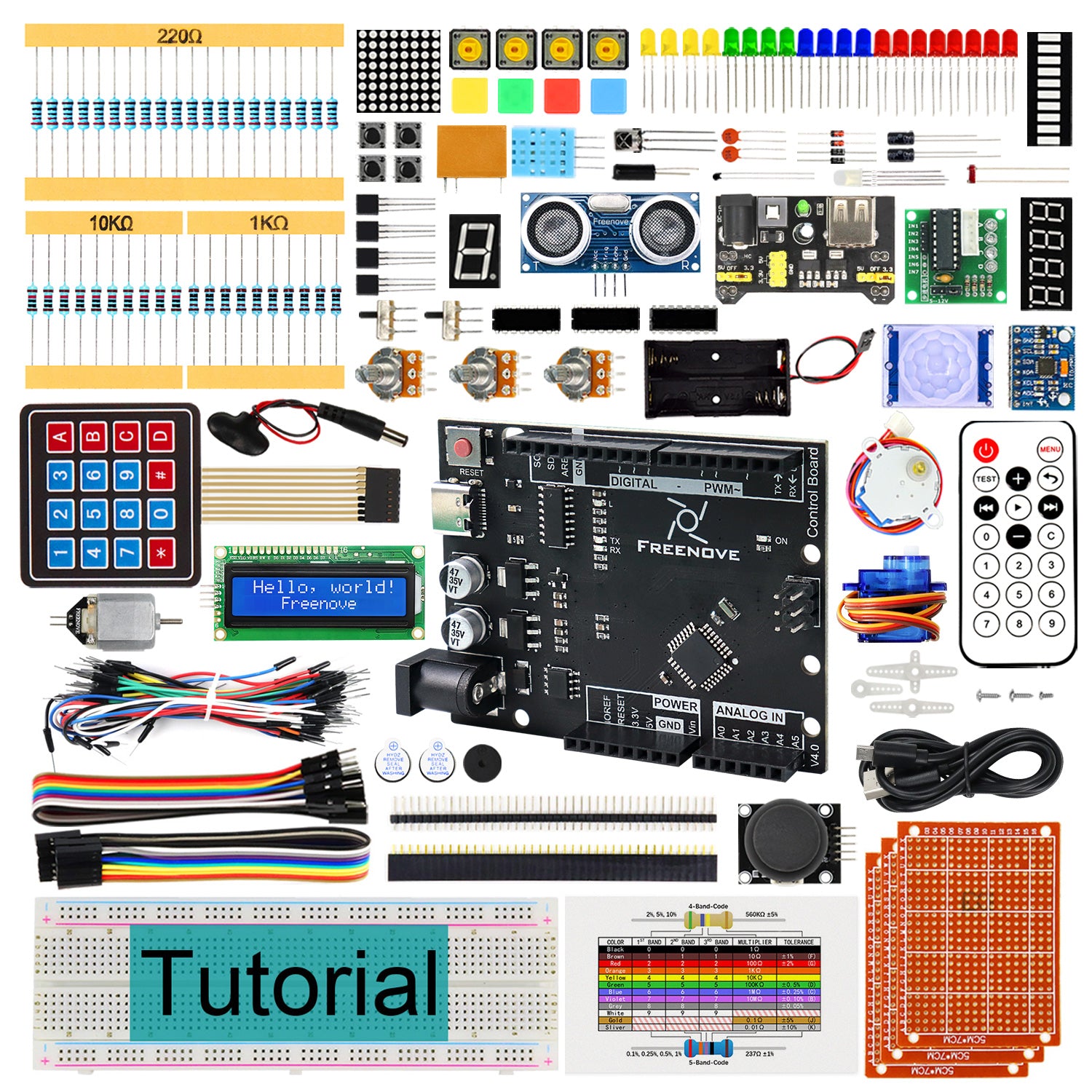
The Freenove Ultimate Kit is the big box. 258 components. 220+ pages of tutorials. 57 projects. It covers more ground than any other kit at this price — including projects with ultrasonic sensors, servos, LCD displays, IR receivers, matrix keyboards, and more. The Freenove tutorial PDF is consistently praised as the clearest beginner documentation in this category, which matters more than component count when things inevitably don’t work the first time.
This kit uses an UNO-compatible board and comes in versions for both Arduino and Raspberry Pi. The sheer volume of components means teens are unlikely to run out of things to build before they outgrow the kit entirely. The tradeoff: 258 components in a box is also 258 components to sort, lose, and search for. A small organizer tray ($5–8) is worth adding to the order.
Bottom line: Maximum value per dollar if the teen is committed. Pairs well with a YouTube tutorial channel habit.
Comparison Table
| Product | Price | Skill Level | Age | Standout Feature |
|---|---|---|---|---|
| Waveshare ESP32-S3 Round | $20 | Beginner–Mid | 12+ | DIY smartwatch, cheapest wearable platform |
| BBC Micro:bit V2 GO | $22 | Absolute beginner | 10+ | Best on-ramp, drag-and-drop to Python |
| M5Stack Cardputer Adv | $30 | Beginner–Mid | 12+ | Fully assembled, WiFi, keyboard, top pick |
| Snap Circuits Jr. SC-100 | $25 | Absolute beginner | 8–12 only | No-solder snap components, 100 projects |
| ELEGOO UNO R3 Super Starter | $35 | Beginner | 12+ | Classic Arduino, 32 projects, proven path |
| ELEGOO ESP32 Super Starter | $40 | Beginner | 12+ | Same as UNO but adds WiFi + Bluetooth |
| Freenove Ultimate Starter | $50 | Beginner–Mid | 12+ | Most components, 57 projects, best docs |
Our Pick
M5Stack Cardputer Adv at $30.
It’s the only item on this list that’s already a finished product. No breadboard setup. No wiring diagram to follow before anything happens. Turn it on, and it works. The keyboard, screen, WiFi, speaker, and microphone are all there — which means a teen can spend their first hour running interesting apps and their second hour writing one.
For teenagers who are already curious about technology and want something that feels like a real tool — not a homework project — this is the gift. The community is active, the GitHub repos are packed, and the ESP32-S3 inside is the same chip powering real commercial products. Learning on it isn’t practice. It’s the real thing.
If your teen is younger or newer to electronics, start with the BBC Micro:bit V2 GO and graduate to the Cardputer when the basics are solid. If they’re committed to the Arduino path and want the most structured learning experience, the ELEGOO ESP32 Super Starter Kit is the right call — the WiFi capability alone makes it worth the extra $5 over the UNO version.
Every item on this list is under $50. Every one of them can start a genuine interest in electronics, coding, or engineering. Pick the right one for where your teenager is right now — not where you hope they’ll be.
Projects to build with these gifts
Every gift above pairs with real projects. Here are picks matched to each price range:
Under $25 (Micro:bit, Waveshare Round Display)
| Project | What you’ll build | Time |
|---|---|---|
| DIY Smartwatch | Custom watch with the round display | ~3h |
| Step Counter Watch | Wearable pedometer | ~2h |
| Data Collector | Sensor logger for school experiments | ~1h |
Under $35 (M5Stack Cardputer)
| Project | What you’ll build | Time |
|---|---|---|
| Universal TV Remote | IR blaster that controls any TV | ~1h |
| Encrypted Messenger | Secure text chat between devices | ~2h |
| Pocket Synth | Tiny sound synthesizer | ~2h |
Under $50 (ELEGOO kits, Freenove)
| Project | What you’ll build | Time |
|---|---|---|
| Smart Light Controller | Phone-controlled LED from browser | ~1h |
| Weather Station | Temperature/humidity dashboard | ~2h |
| Laser Tripwire | Laser + photoresistor alarm | ~1h |
Prices are approximate and subject to change. Check current prices via the links above.